Donuts Donky: A Playful Font for Creative Kid-Friendly Designs
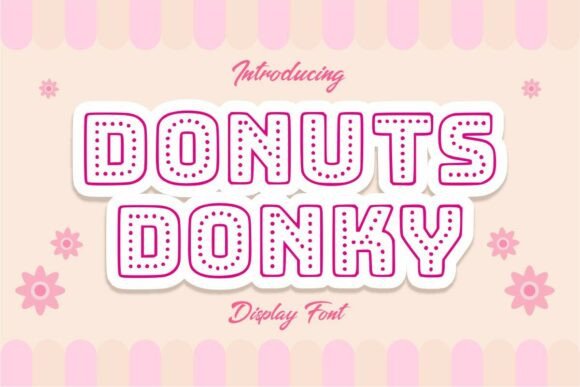
When it comes to designing for children, finding the right font can make all the difference. Donuts Donky stands out as a distinctive typeface crafted specifically for youthful, vibrant projects. With its bold presence and two unique styles—Dotted and Solid—this font brings a sense of whimsy and creativity to a wide array of design applications. Whether you're working on t-shirts, invitations, or digital graphics, Donuts Donky offers a charming way to connect with younger audiences.
What Makes Donuts Donky Unique?
At its core, Donuts Donky is designed with a playful aesthetic that resonates with children and appeals to parents seeking fun, approachable visuals. The dotted style introduces a handcrafted, whimsical touch, while the solid style provides a more grounded, yet still lively, alternative. This dual-style format allows for creative layering and contrast, giving designers flexibility without sacrificing thematic cohesion.
Unlike many standard children’s fonts that lean heavily on exaggerated curves or cartoonish shapes, Donuts Donky strikes a balance between legibility and charm. It avoids over-the-top stylization, making it suitable for both short bursts of text like headlines and longer sections such as storybooks or product descriptions.
Comparing Donuts Donky to Other Kid-Friendly Fonts
The market for child-oriented fonts is broad, ranging from highly stylized script fonts to more structured sans-serif options. Many fonts in this category aim to capture youthful energy but often fall short when it comes to adaptability. Some are overly decorative, making them difficult to read in larger blocks of text, while others lack personality and feel too generic.
Donuts Donky bridges this gap by offering a consistent, readable structure while maintaining a distinct visual flair. Compared to typical cartoon-style fonts, it feels more intentional and less chaotic. When stacked against simpler sans-serif fonts aimed at children, it adds a layer of visual interest without compromising clarity. This makes it particularly effective for branding, product packaging, and digital media where both engagement and readability matter.
Use Cases and Design Applications
One of the standout features of Donuts Donky is its versatility across mediums. Here are some practical applications where this font shines:
- Apparel and Accessories: T-shirts, tote bags, and hats benefit from the font’s bold presence and playful tone.
- Stationery and Invitations: Birthdays, baby showers, and school events gain a cheerful aesthetic through Donuts Donky’s dotted and solid styles.
- Printable Crafts: Stickers, coloring pages, and DIY décor projects become more engaging with a font that feels handmade yet professional.
- Branding and Logos: For kid-focused businesses like toy stores, nurseries, or children’s book publishers, Donuts Donky offers a recognizable and approachable typographic identity.
- Social Media Graphics: Platforms like Instagram and Pinterest thrive on visual appeal, and Donuts Donky’s energetic look helps content stand out in crowded feeds.
Strengths and Tradeoffs
Like any design element, Donuts Donky has its strengths and limitations. Understanding these can help you decide whether it aligns with your project’s goals.
Strengths:
- Distinctive dotted and solid variations offer creative flexibility.
- Well-suited for both print and digital applications.
- Readability remains strong even at smaller sizes.
- Visually engaging without overwhelming the design.
Tradeoffs:
- May not be ideal for formal or neutral-toned projects.
- Overuse of the dotted style could feel gimmicky in extended layouts.
- Not the best fit for projects targeting older age groups or requiring a minimalist aesthetic.
When Donuts Donky Is the Right Choice
If your design calls for a sense of joy and spontaneity, Donuts Donky is an excellent option. It works especially well in contexts where the audience is young or where a lighthearted tone is essential. The font’s dual-style format allows for layered compositions, such as pairing the dotted version for headlines with the solid style for supporting text.
Additionally, it’s a smart choice when you want a font that feels unique but doesn’t require extensive customization. Unlike some child-themed fonts that come with alternate glyphs or complex ligatures, Donuts Donky maintains a straightforward structure that’s easy to implement across design tools.
When Another Option Might Be Better
Despite its many advantages, there are situations where Donuts Donky may not be the most suitable choice. If your project requires a more subdued or sophisticated tone—such as for educational materials aimed at teenagers or branding for a boutique nursery—you may want to explore more restrained typefaces.
Similarly, if your design needs a highly stylized or thematic font—like a pirate-themed birthday card or a rustic farmhouse aesthetic—Donuts Donky’s playful charm may not align with the desired mood. In those cases, opting for a more niche font or a combination of fonts might better serve the visual narrative.
Practical Comparison: Donuts Donky vs. Common Alternatives
Let’s take a look at how Donuts Donky stacks up against other commonly used kid-friendly fonts:
- Comic Sans MS: While widely recognized, Comic Sans often feels outdated and lacks refinement. Donuts Donky offers a more modern and intentional design while maintaining a casual tone.
- Kids: A popular Google Font, “Kids” has a similar playful appeal but offers fewer stylistic variations. Donuts Donky’s dual-style approach gives it an edge in versatility.
- Butterfly Kids: More decorative and script-based, Butterfly Kids works well for invitations but can be less readable in longer text. Donuts Donky maintains better legibility while still being visually engaging.
- Chalkboard-style fonts: These are great for a hand-drawn look but can appear messy in digital formats. Donuts Donky’s dotted style offers a cleaner, more structured alternative.
Each of these fonts has its place, but Donuts Donky’s combination of readability, charm, and adaptability makes it a compelling option for a broad range of uses.
Final Considerations for Choosing a Kid-Friendly Font
Selecting the right font for a child-focused design involves more than just aesthetics. It’s about finding a balance between personality, readability, and appropriateness for the intended audience. Donuts Donky succeeds in offering a distinctive yet practical choice that supports both creative expression and functional design.
Before finalizing your decision, consider testing the font in different contexts. Try it in both headline and body text formats, and see how it performs across print and digital mediums. If it aligns with your brand voice and enhances the overall design without distracting from the message, it’s likely a strong contender.