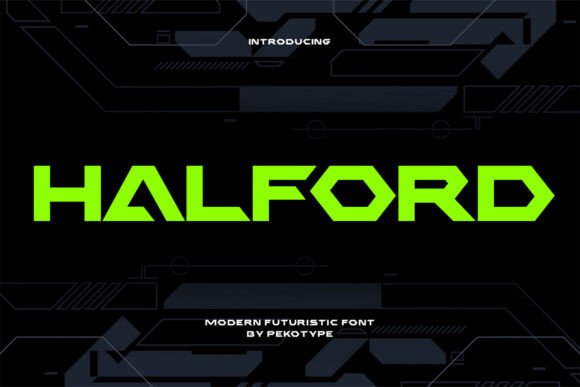
Halford: A Modern Futuristic Geometric Font for Forward-Thinking Design
Typography plays a critical role in shaping the visual identity of brands, products, and digital experiences. Among the many typefaces available today, Halford stands out as a modern, futuristic geometric font designed for clarity, strength, and visual impact. Its clean construction and bold aesthetic make it a compelling choice for designers working in tech, gaming, branding, and speculative design fields.
What Makes Halford Unique?
Halford is crafted with a focus on geometric precision and contemporary style. Unlike traditional sans-serif fonts that emphasize readability over form, Halford leans into its angular, structured shapes to convey a sense of innovation and forward motion. The font’s design language incorporates strong lines, sharp corners, and balanced proportions that evoke a sense of digital sophistication.
One of its defining features is its multilingual support combined with both uppercase and lowercase letterforms. This flexibility makes it suitable for global projects without sacrificing typographic integrity. Whether used in a logo, a product label, or a digital interface, Halford maintains a strong visual presence that aligns with themes of technology, progress, and futurism.
How Halford Compares to Similar Fonts
When evaluating modern geometric fonts, it's important to consider how Halford stacks up against similar styles. Many contemporary typefaces aim for a clean, minimal aesthetic, but not all balance form and function as effectively. Some fonts prioritize readability to the point of losing visual interest, while others lean too heavily into stylistic flourishes that compromise legibility.
Halford finds a middle ground. It shares visual DNA with other geometric sans-serif fonts, but its futuristic edge sets it apart. For example, when compared to more neutral geometric fonts, Halford tends to feel more dynamic and expressive—making it a better fit for branding and design projects that want to project innovation and confidence.
Strengths and Tradeoffs of Using Halford
Like any design tool, Halford has specific strengths and limitations. Its bold, structured appearance works exceptionally well in contexts where visual impact is key. It excels in headlines, branding marks, and UI elements that benefit from a high-tech aesthetic. However, due to its geometric nature, it may not be the best choice for long-form body text or applications where subtle typographic nuance is more important than visual flair.
- Strengths: Strong visual presence, clean construction, multilingual support, versatility across digital and print media.
- Limitations: May feel too stylized for traditional or minimalist design contexts; less ideal for extended reading.
Designers should also consider how Halford integrates into broader typographic systems. It pairs well with simpler, more neutral fonts to create visual hierarchy, but using it in isolation can result in a cohesive, futuristic look—especially for branding or thematic projects like sci-fi media or tech product launches.
Best-Use Scenarios for Halford
Halford shines in environments where a sense of progress and innovation is central to the message. Here are a few practical applications where this font can make a strong impression:
- Branding for tech startups – Conveys forward-thinking identity and digital sophistication.
- Gaming titles and UI elements – Its structured geometry aligns well with the visual language of digital and virtual environments.
- Social media graphics – Helps content stand out with a bold, modern aesthetic.
- Product packaging – Adds a premium, futuristic touch to consumer electronics or lifestyle tech.
- Sci-fi and speculative design projects – Supports immersive world-building through typography that feels both familiar and otherworldly.
In these contexts, Halford’s design language reinforces the intended message without overpowering the content. It becomes a tool for visual storytelling rather than just a stylistic choice.
When to Consider Alternatives
While Halford offers a distinctive aesthetic, it’s not a one-size-fits-all solution. Designers working on projects that require subtlety, historical reference, or organic warmth may find that other typefaces better suit their needs. For example, serif fonts or more humanist sans-serifs might be more appropriate for editorial design, academic publishing, or heritage branding.
Similarly, if a project requires extreme legibility at small sizes or in low-resolution environments, a more neutral geometric font could offer better performance. The key is to match the typographic tone with the project’s goals and audience expectations.
Practical Considerations for Choosing Halford
Before integrating Halford into a design system, consider the following decision factors:
- Visual tone: Does the project benefit from a high-tech, futuristic aesthetic?
- Use case: Will the font primarily be used in headlines, logos, or interface elements rather than body text?
- Target audience: Is the intended audience familiar with or receptive to modern, stylized typography?
- Language support: Does the project require multilingual capabilities that Halford provides?
These questions help determine whether Halford aligns with both the functional and aesthetic requirements of the design.
Conclusion: Halford as a Design Tool for Tomorrow
In a world increasingly shaped by digital culture, typography must evolve to reflect new visual languages. Halford offers a compelling option for designers seeking a modern, geometric font that communicates strength, clarity, and a sense of the future. While it may not be the best fit for every project, its unique combination of style and functionality makes it a valuable addition to any designer’s toolkit—especially those working in tech, media, or speculative design.
Ultimately, the decision to use Halford comes down to context. When the visual tone of a project aligns with themes of progress and innovation, Halford can help elevate the design from functional to visionary.