Smart and Bright Font: A Playful and Bold Design Choice
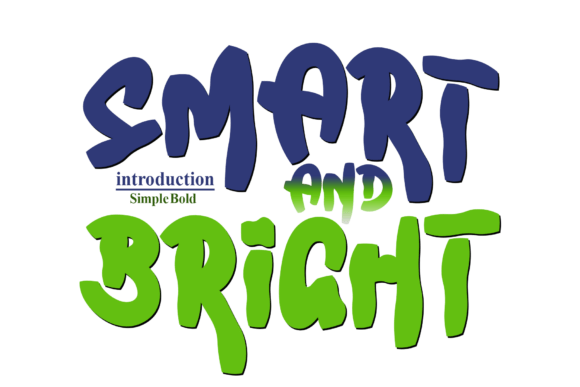
The Smart and Bright font is a distinctive typeface that captures attention with its energetic and casual appearance. Designed with a hand-drawn, graffiti-inspired aesthetic, this sans-serif font features thick, heavy strokes and rounded, irregular letterforms that convey a sense of spontaneity and fun. Its visual impact makes it a compelling option for designers seeking to inject vibrancy and personality into their projects.
What Makes Smart and Bright Unique?
Smart and Bright stands out due to its bold and expressive design. The font’s chunky, uneven shapes and exaggerated curves give it a dynamic rhythm that feels both lively and approachable. Unlike more structured typefaces, it embraces imperfection, with slightly misaligned edges and varied proportions that mimic the organic quality of hand-painted lettering.
This design style is particularly effective in environments where visual energy and a youthful tone are desired. The font’s irregularities contribute to its character, making it feel more personal and less mechanical than traditional sans-serif fonts. Its heavy weight ensures strong legibility at a distance, which is especially valuable in display applications.
Why Consider Using Smart and Bright?
Designers may be drawn to Smart and Bright for its ability to communicate enthusiasm and playfulness. It is well-suited for branding and promotional materials aimed at children, as well as for creative projects that benefit from a casual, expressive tone. Its graffiti-inspired roots make it a natural fit for urban or street-style aesthetics.
- Attention-grabbing display style
- Conveys energy and positivity
- Works well in informal, creative contexts
For those seeking to differentiate their design from more conventional, minimalist styles, Smart and Bright offers a refreshing alternative that can elevate the visual tone of a project.
Key Benefits of Smart and Bright
One of the primary advantages of using Smart and Bright is its visual impact. Because of its bold weight and irregular shapes, it naturally draws the eye, making it an effective choice for headlines, logos, and posters. It also adds warmth and approachability, which can help brands connect with audiences on an emotional level.
Another benefit is its versatility in informal design settings. Whether used for a children’s book cover, a product label, or a concert flyer, the font adapts well to playful and expressive layouts. Its hand-drawn nature also allows it to blend seamlessly with other organic design elements like illustrations or brush-style graphics.
Tradeoffs and Considerations
Despite its strengths, Smart and Bright is not universally applicable. Due to its irregular and decorative nature, it may not be suitable for formal or technical contexts where clarity and precision are essential. Long blocks of text can become difficult to read, especially at smaller sizes, due to the font’s uneven spacing and exaggerated curves.
Additionally, because of its strong visual personality, it may overpower more subtle design elements if not used carefully. Designers should consider how well the font aligns with the overall tone of the project and whether its informal, energetic style supports the intended message.
When Smart and Bright Is a Strong Fit
Smart and Bright excels in applications where visual expression and emotional engagement are priorities. It works especially well in:
- Children’s branding and product packaging
- Event posters and promotional materials
- Playful or artistic logo designs
- Social media graphics and digital illustrations
In these contexts, the font’s bold, whimsical character enhances the overall design and supports a lively, approachable tone.
When Alternatives May Be Better
For projects that require a more professional, minimalist, or neutral tone, alternatives to Smart and Bright may be more appropriate. In formal branding, technical documentation, or interface design, cleaner, more structured sans-serif fonts like Helvetica, Roboto, or Open Sans may offer better readability and versatility.
Designers should also consider alternatives if they need a font that maintains consistency across different weights and styles. While Smart and Bright thrives in expressive, single-use scenarios, it may not offer the same level of adaptability as more conventional typefaces when used across multiple platforms or design variations.
Practical Insights for Choosing Smart and Bright
Before selecting Smart and Bright for a project, consider the following factors:
- Target audience: Does the font’s playful tone align with the preferences and expectations of your audience?
- Application: Will the font be used for short-form display text or extended reading? If the latter, legibility should be a priority.
- Brand identity: Does the font reflect the personality and values of the brand or message being communicated?
- Visual balance: Will the font complement or clash with other design elements?
Testing the font in the intended context—whether through mockups or sample layouts—can help determine whether it enhances or detracts from the overall design.
Conclusion
The Smart and Bright font is a bold, expressive choice that brings energy and personality to design projects. Its hand-drawn, graffiti-inspired style makes it a standout option for playful, informal, and creative applications. While it may not suit every design scenario, it offers a compelling alternative for those looking to create engaging, visually dynamic content.
Ultimately, whether to use Smart and Bright depends on the tone, audience, and purpose of the design. By evaluating its strengths and limitations in context, designers can make informed decisions that support both aesthetic goals and functional needs.